Skip to content
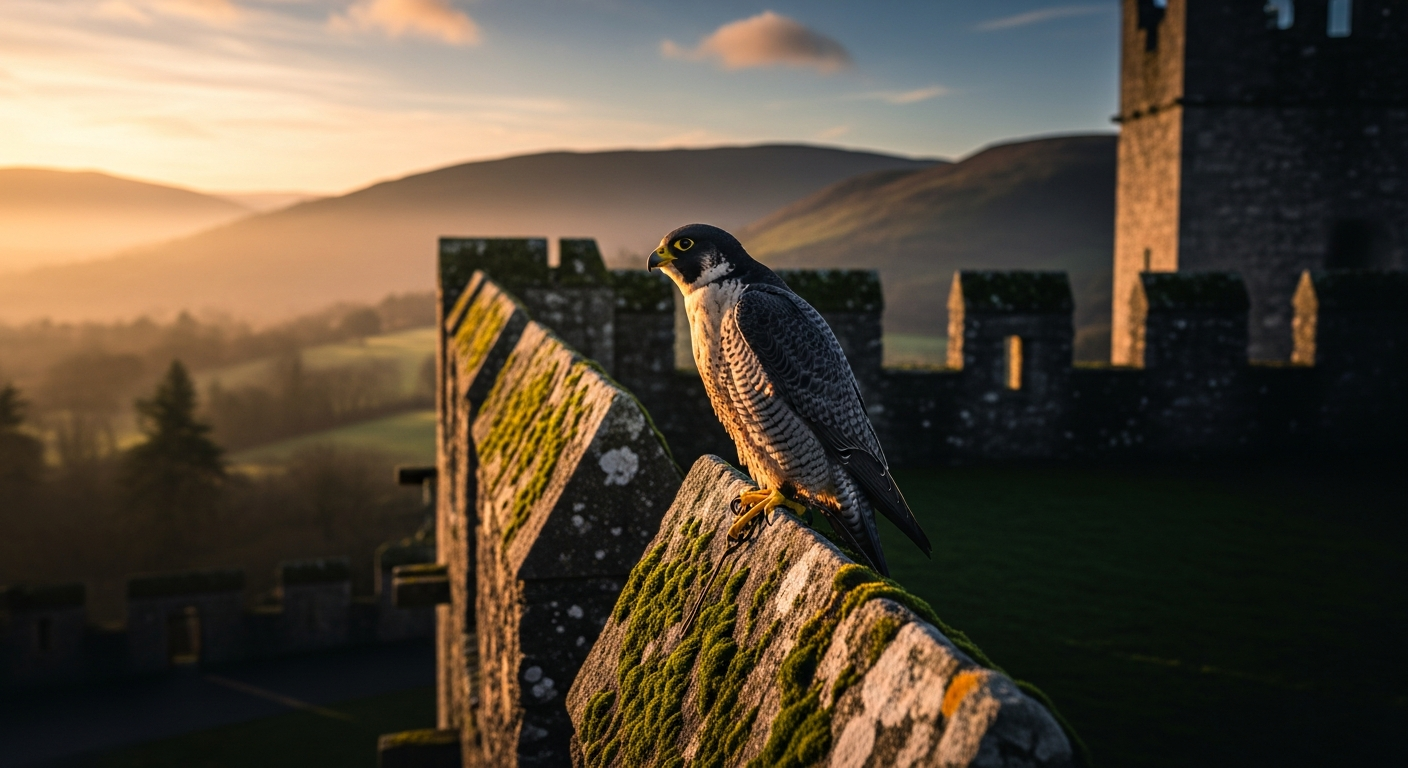
Peregrine falcon perched on ancient Irish castle stone wall with misty green hills in the background
UNESCO Intangible Cultural Heritage

The Ancient Art of
Falconry in Ireland

For over 4,000 years, falconry has shaped the culture, landscape, and soul of Ireland. A living tradition recognised by UNESCO and kept alive by passionate falconers across the Emerald Isle.

4,000+

Years of Heritage

25

UNESCO Nations

2016

UNESCO Recognition

12+

Native Raptor Species

Living Tradition

A Craft Older Than
Written History

Falconry arrived in Ireland long before the first written chronicles, carried by Celtic tribes who revered birds of prey as symbols of power, freedom, and the divine. Hawks and falcons were not merely hunting tools — they were companions, status symbols, and spiritual guides.

The ancient Irish Brehon Laws codified the ownership of falcons according to social rank. Only kings could fly the mighty Peregrine Falcon. Lords kept Gyrfalcons. Free men flew the Merlin or Sparrowhawk. These laws reveal how deeply falconry was woven into the social fabric of early Ireland.

Centuries of turbulence — invasions, colonisation, land clearances — threatened this tradition. Yet the bond between Irish falconers and their birds proved unbreakable. Today, a new generation carries the torch, honouring the past while sharing this extraordinary art with the world.

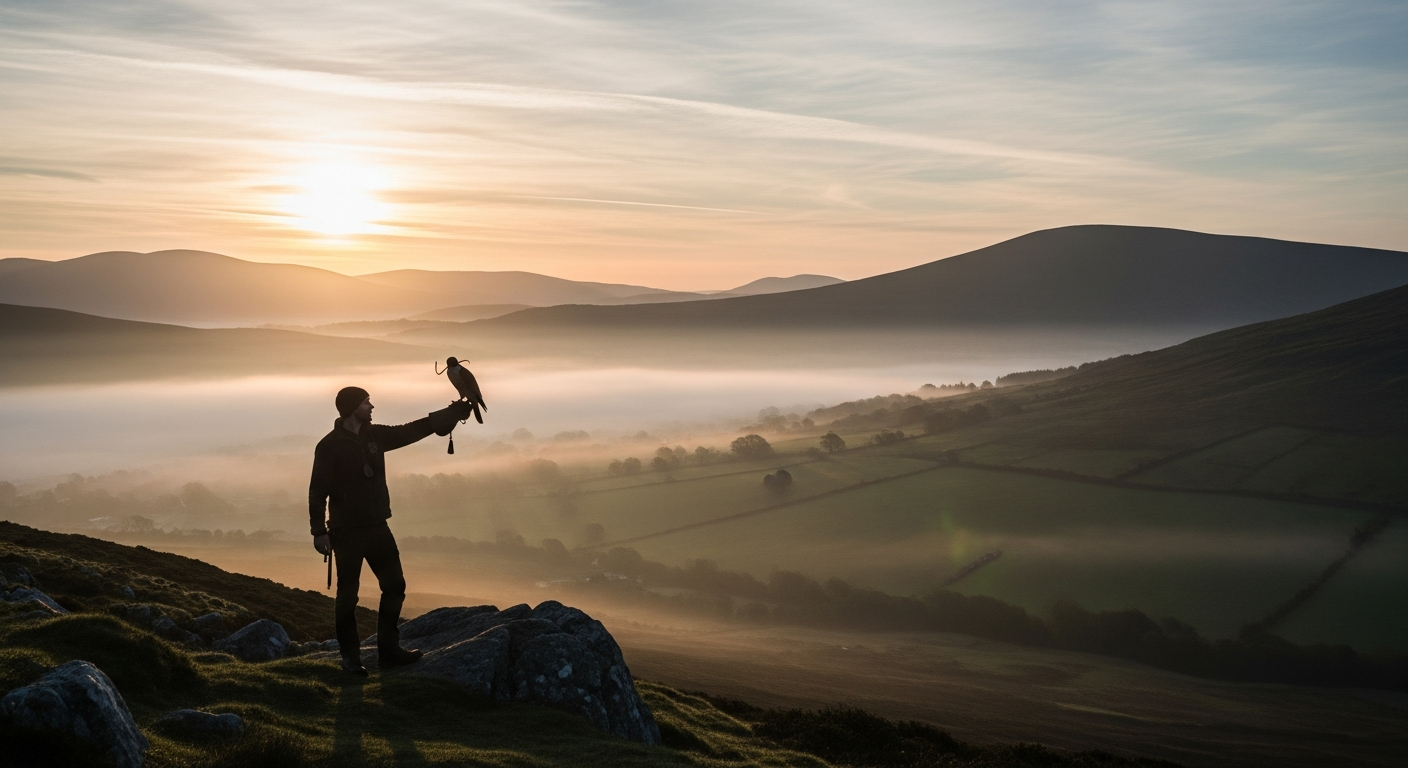
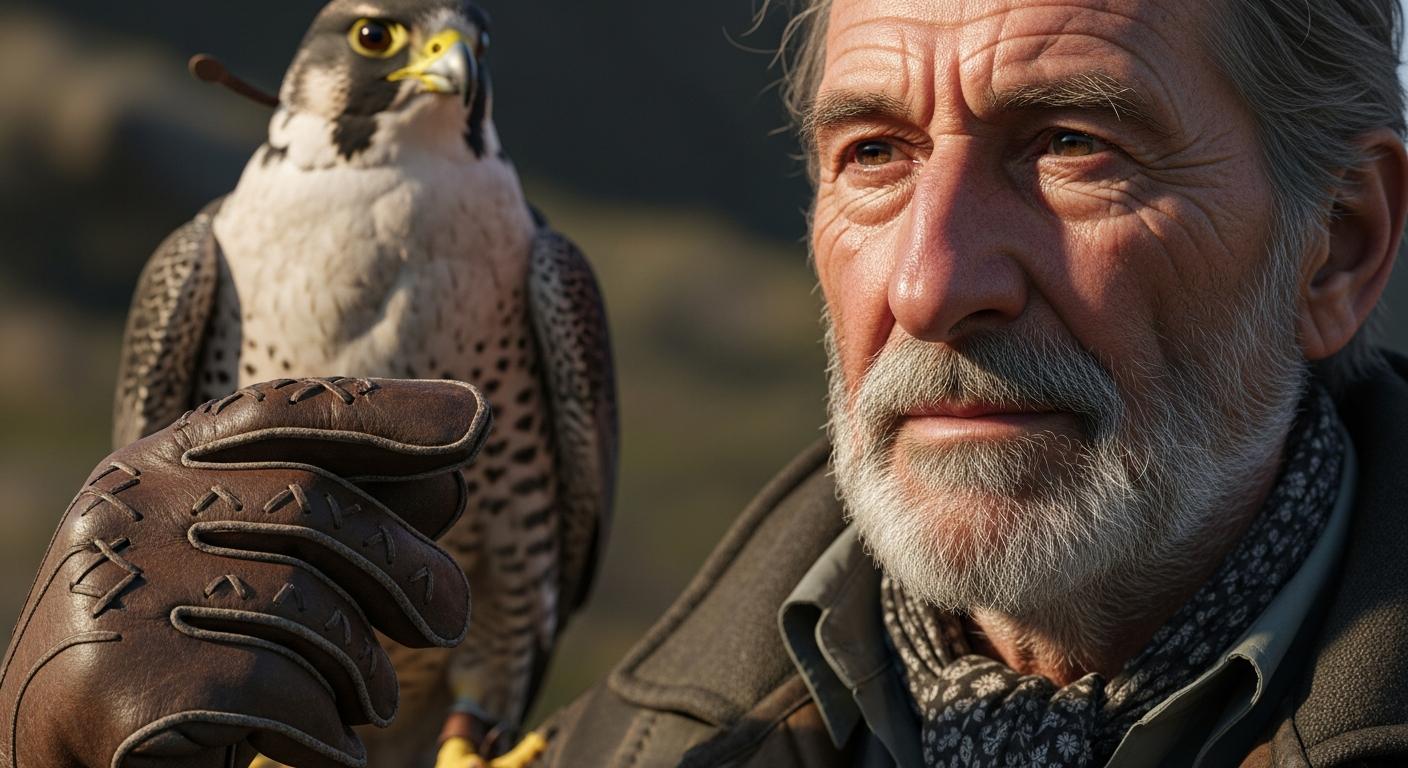
Falconer's leather glove holding a hawk in the Irish countryside with ancient stone wall in the background
Global Recognition

UNESCO Intangible Cultural Heritage

In 2016, falconry was inscribed on the UNESCO Representative List of the Intangible Cultural Heritage of Humanity — a global recognition of its enduring cultural and social significance.

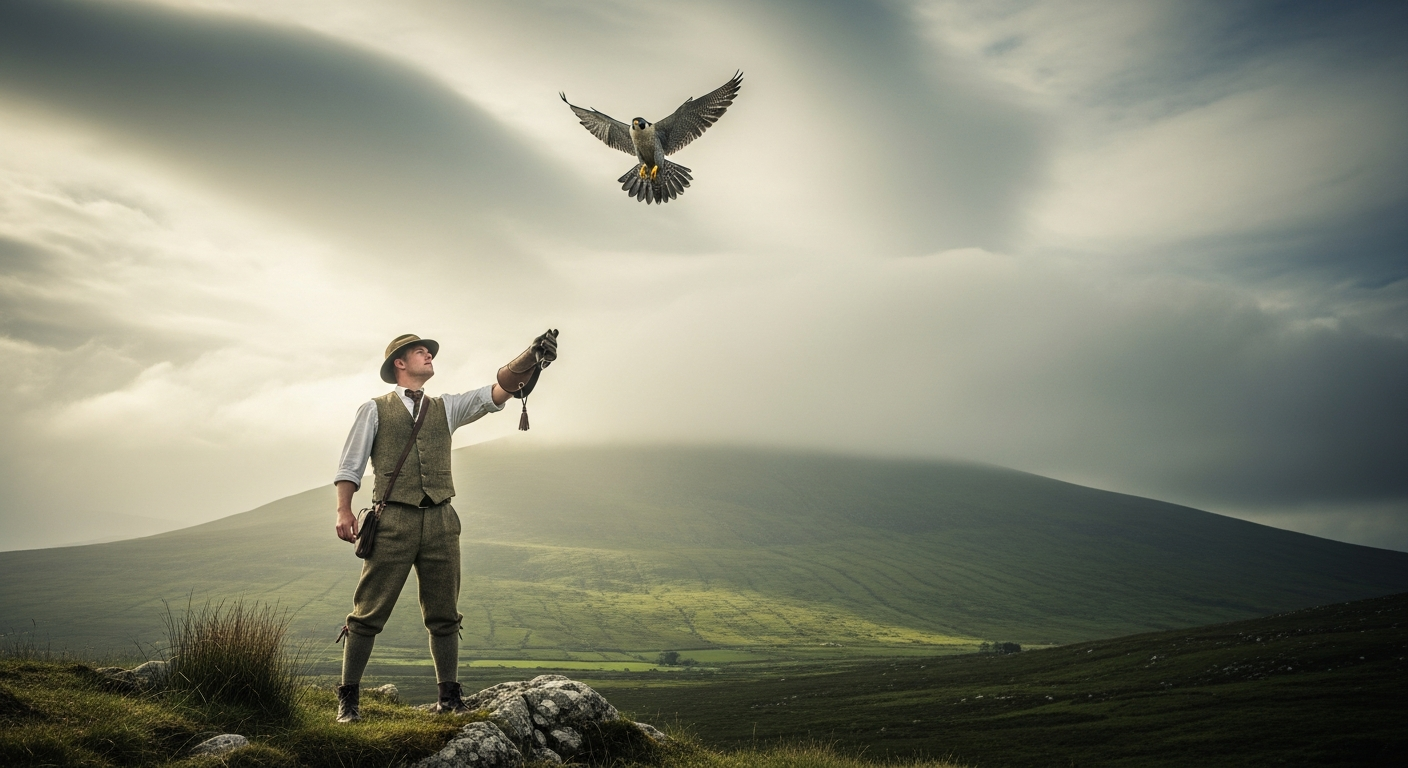
Falconer releasing a peregrine falcon into the sky over the Irish countryside during a heritage demonstration

A Multinational Inscription

Ireland joined 24 other nations in the 2016 UNESCO inscription, including Belgium, the UAE, France, and Mongolia — demonstrating falconry's remarkable reach across cultures and continents as a shared human heritage.

Living, Breathing Tradition

Unlike many recognised heritages preserved only in museums, falconry remains an active, practised craft. In Ireland, it continues to be transmitted through direct mentorship — master to apprentice — preserving centuries of wisdom.

Conservation Partnership

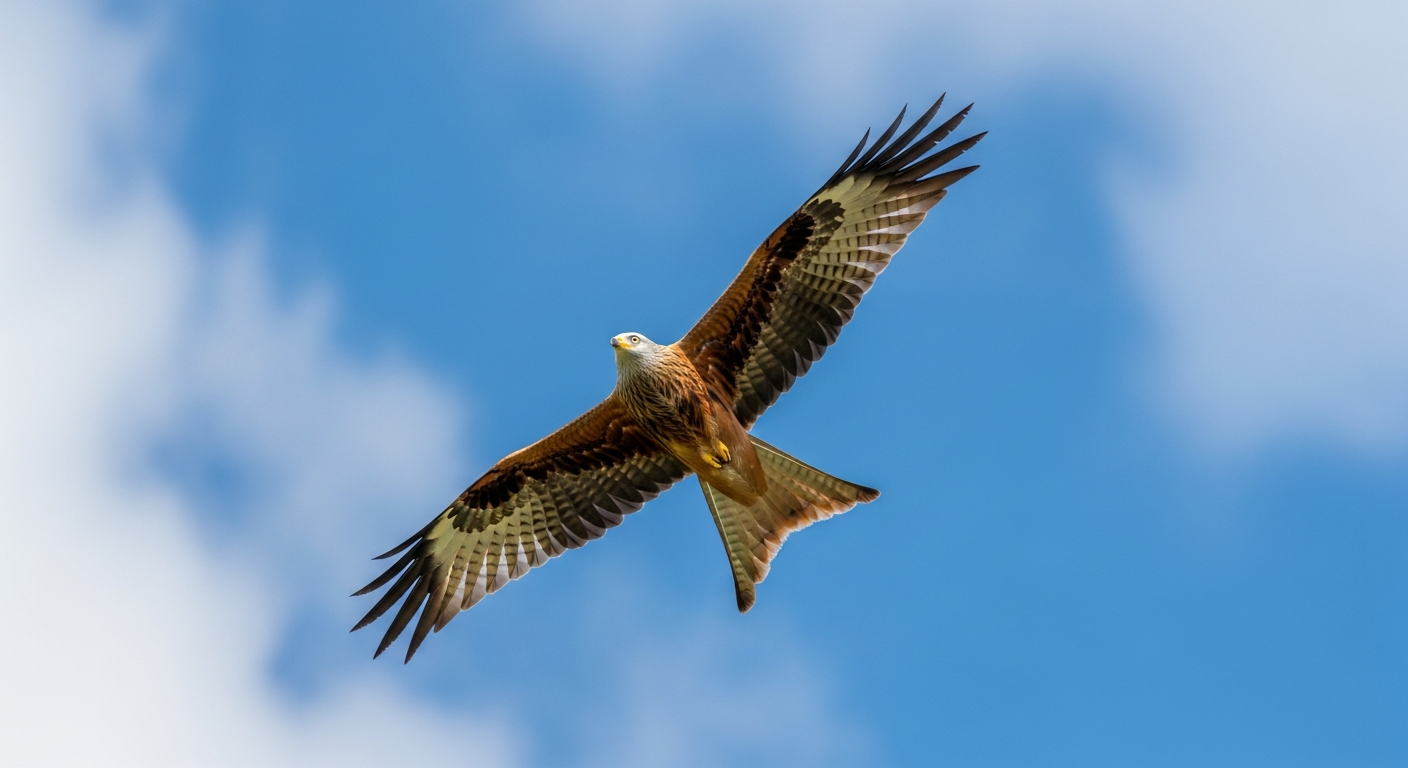
Irish falconers have been instrumental in the conservation of native raptor species. The reintroduction of the Red Kite and the protection of Peregrine Falcon nesting sites are testaments to this community's dedication to the natural world.

Through the Ages

A Journey Through Time

From Celtic mythology to modern conservation, trace the extraordinary story of falconry on the island of Ireland.

  1. 2000 BC — 400 AD

    Celtic Origins & Mythology

    Birds of prey held sacred status in Celtic Ireland. Figures such as the Tuatha Dé Danann were associated with hawks and falcons, appearing in the earliest oral traditions and mythological cycles. Archaeological finds suggest trained raptors were used in hunting across the ancient Irish kingdoms.

  2. 5th — 9th Century

    The Brehon Laws & Social Hierarchy

    Ancient Irish Brehon Laws formally codified falconry, stipulating which species could be flown by which social rank. Peregrines were reserved for kings; Gyrfalcons for lords; Merlins for ladies of rank; and Sparrowhawks for common freemen. These laws reflect falconry's central role in defining status and social order.

  3. 10th — 15th Century

    Medieval Golden Age

    Falconry flourished in medieval Ireland under Norman and Gaelic chieftains alike. Irish Peregrines were prized across Europe — traded as diplomatic gifts to courts in England, France, and the Holy Roman Empire. Monastic manuscripts of the era depict falconers in exquisite illuminated detail, their craft a mark of refined civilisation.

  4. 17th — 19th Century

    Suppression & Near-Loss

    The Cromwellian conquest, the Penal Laws, and the dispossession of Gaelic nobility dealt severe blows to Irish falconry. With landowners stripped of their estates, the great tradition was driven underground. The invention of the firearm further marginalised hunting with hawks. Yet knowledge was preserved quietly, passed between dedicated practitioners in rural communities.

  5. 1950s — 2000s

    The Great Revival

    Post-independence Ireland witnessed a proud resurgence of interest in traditional culture. A handful of dedicated falconers founded clubs, formalised training, and petitioned for legal protections. The Irish Hawking Club, established in the mid-twentieth century, became a cornerstone of the revival, setting standards of practice that endure to this day.

  6. 2016 — Present

    UNESCO Recognition & a New Era

    Ireland's inclusion in the UNESCO inscription of falconry was a watershed moment. It galvanised the community, attracted new generations of practitioners, and elevated the craft to global cultural prominence. Today, Irish falconers balance deep tradition with modern conservation ethics, welcoming thousands of visitors each year to experience this extraordinary living heritage.

More Than a Sport

Cultural Significance

Falconry is not merely a hunting tradition — it is a philosophy, a relationship, and a window into Ireland's ancient soul.

The Human-Raptor Bond

At the heart of falconry lies a unique relationship — not ownership, but partnership. A wild bird chooses, to some degree, to return to the falconer's glove. This voluntary bond, built on patience, respect, and mutual trust, sets falconry apart from all other field sports.
Reading the Irish Landscape

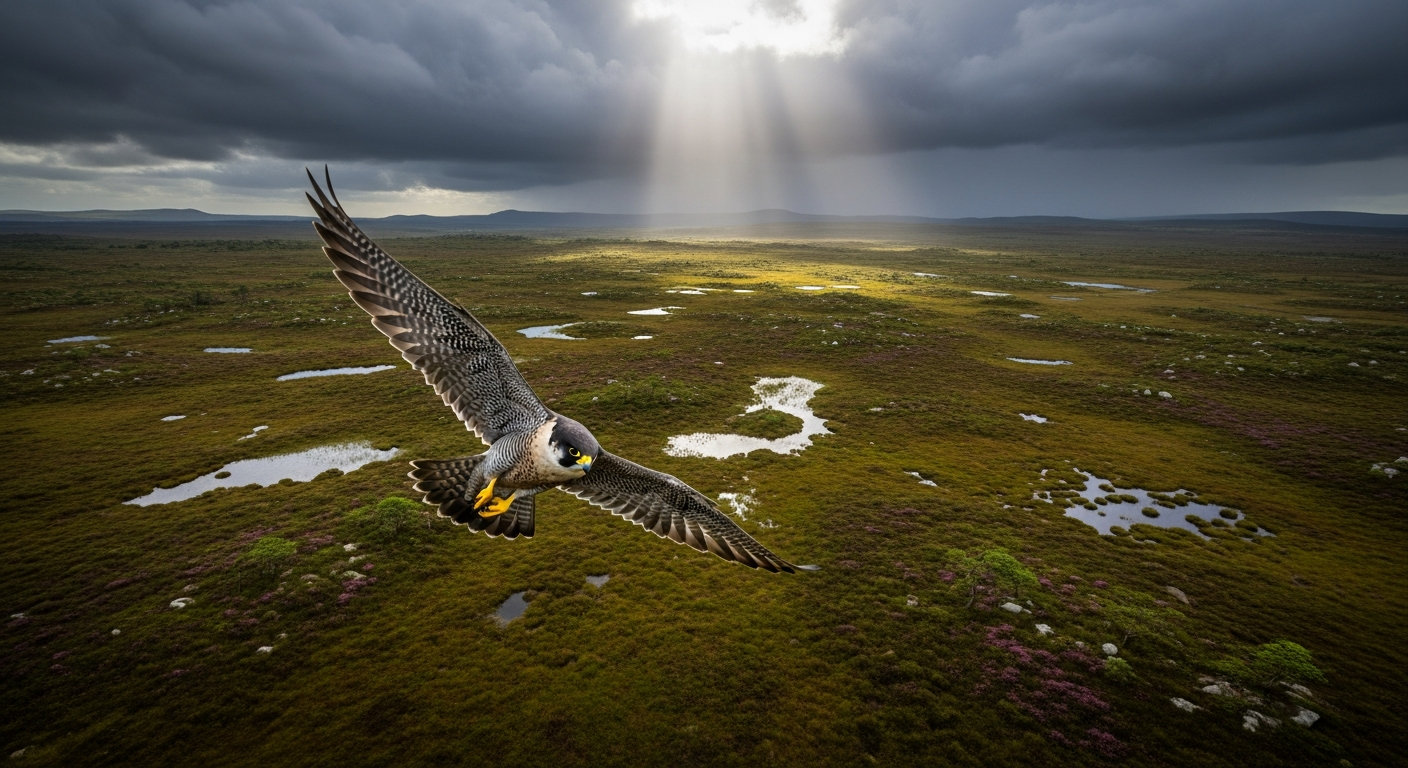
Falconry demands an intimate knowledge of the landscape — weather patterns, topography, prey behaviour, and seasonal change. Irish falconers have, for millennia, been custodians of an ecological wisdom that can only be gained by slow, attentive immersion in nature.

Knowledge Passed Hand to Hand

No book fully captures what is learnt in the field at a master's side. The craft of conditioning, training, and flying a raptor is transmitted through living practice. This oral and experiential transmission is precisely what UNESCO recognised — a form of knowledge that cannot be codified, only lived.

The Falconer's Craft

Tools of a Timeless Trade

Each item in a falconer's kit has centuries of refinement behind it, crafted with purpose and deep knowledge of the raptor's needs.

Traditional leather falconry gauntlet glove on a wooden surface

The Glove (Gauntlet)

Hand-stitched from heavy leather, the gauntlet protects the falconer's hand and arm from talons whilst providing a secure perch. Irish gauntlets are traditionally made from deer or cow hide.

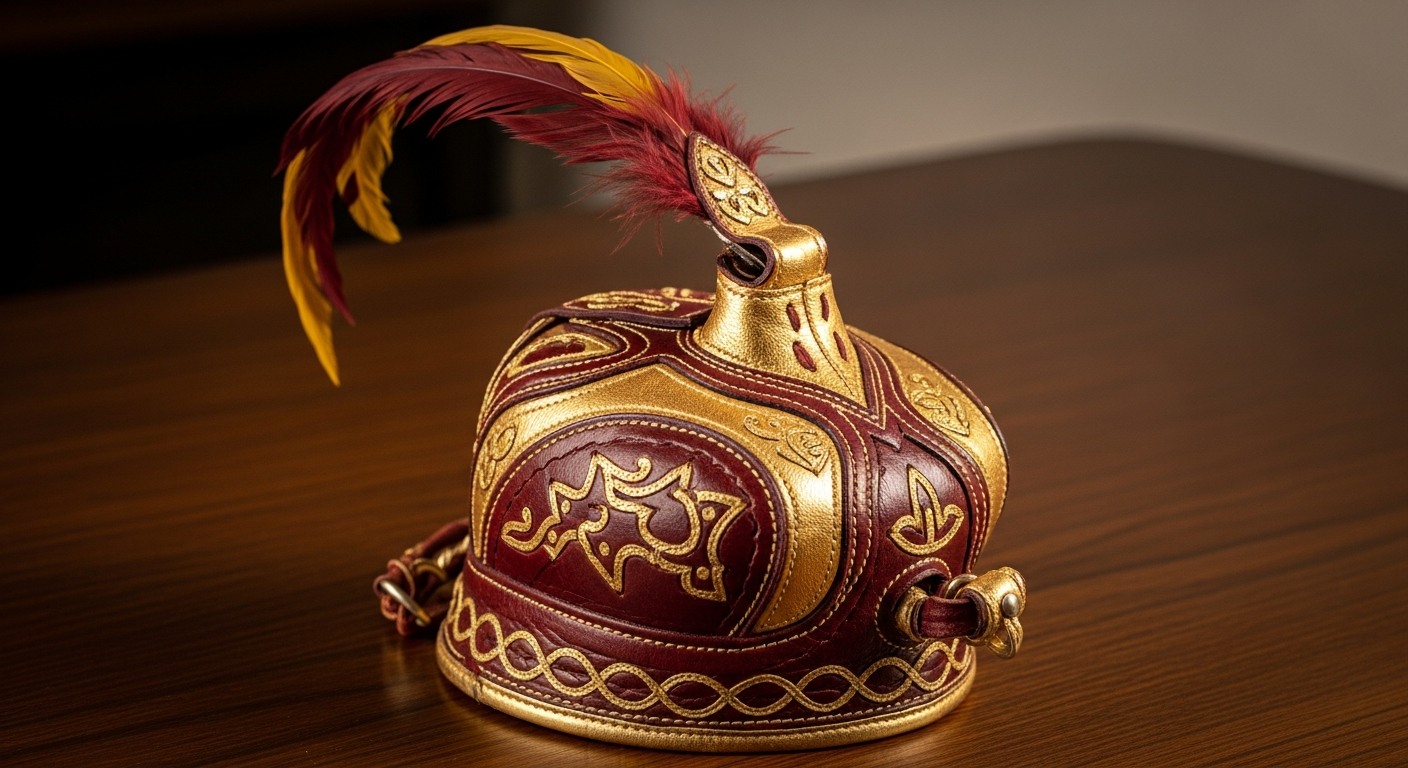
Ornate traditional falconry hood in burgundy and gold leather with decorative plume

The Hood

The falconry hood calms the bird by covering its eyes, reducing visual stimuli. Beautifully crafted and fitted precisely to each bird, hoods are considered an art form in themselves — some decorated with silk and gold thread.

Close-up of leather jesses and brass bells attached to a hawk's ankle

Jesses & Bells

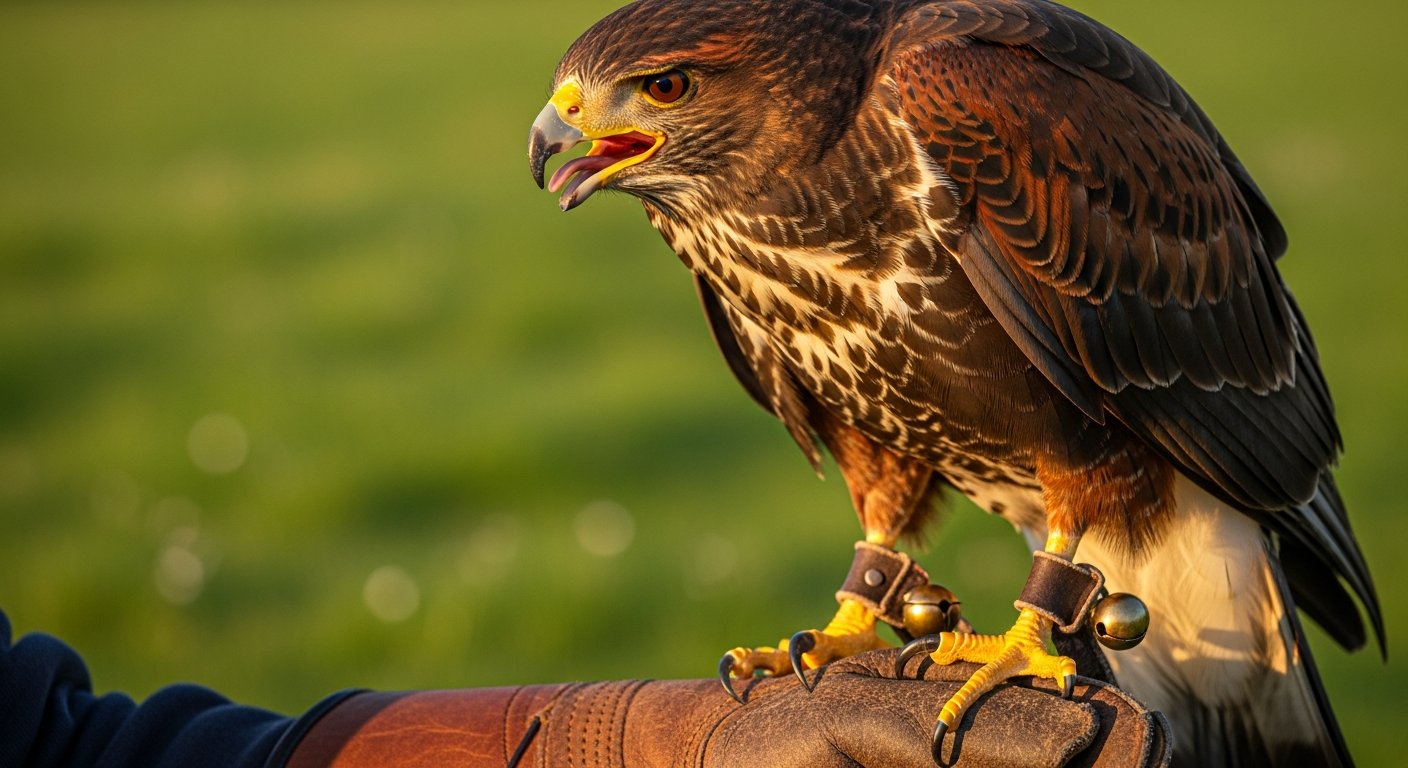
Jesses are thin leather straps attached to the bird's ankles, allowing the falconer to maintain gentle control. Small brass bells are attached to track the bird by sound when hidden in vegetation or distant undergrowth.

Traditional leather and feather falconry lure on Irish grass

The Lure

A weighted bundle of feathers swung on a cord, the lure simulates flying prey and is used to call back and train the falcon. Lure-flying is itself a mesmerising spectacle, often displayed at falconry demonstrations.

Aerial view of the River Shannon winding through the Irish midlands at golden hour

"To fly a falcon is to hold four thousand years of history on your arm — and to feel it take wing."

— An Irish Master Falconer